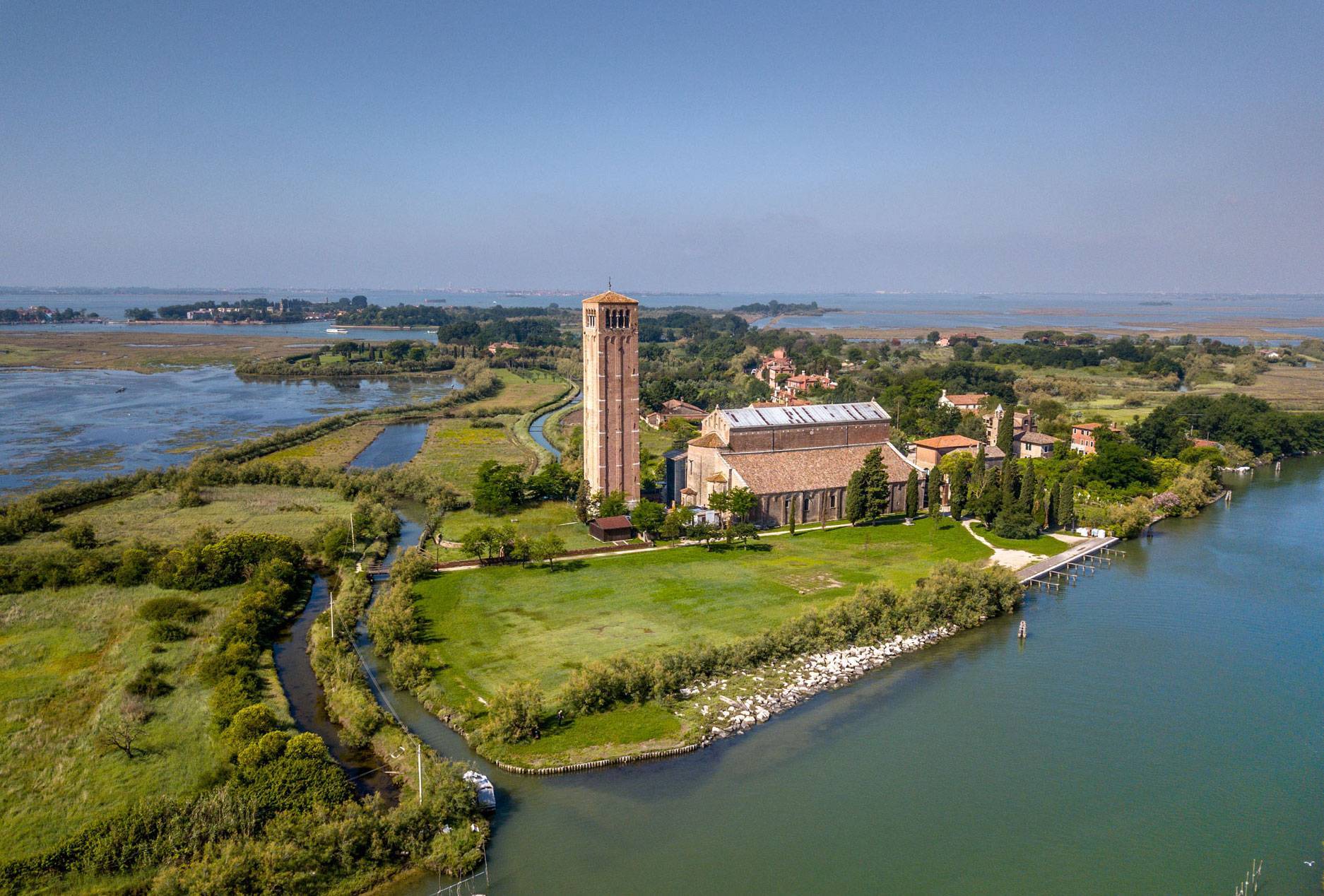
Venice and its lagoon are inextricably linked by a relationship rooted in history. The city itself resembles an archipelago of small islands, which over time has developed into an extraordinary center of power and culture. Over the centuries, the lagoon has protected Venice from invasions, facilitated trade, and hosted monasteries, gardens, fortifications, and aristocratic villas.
Today, some of these islands have become small private paradises, oases of tranquility set within a unique landscape, where historical charm blends seamlessly with contemporary luxury. Many private islands have been purchased over the years, some by private individuals, others by companies, hotel groups, and even cultural institutions. The allure of Venice is unparalleled, and for anyone, having a base here—whether it be a home, a hotel, or the headquarters of an institution—is an exceptional opportunity.
The island of Santa Cristina was bought years ago by the Swarovski family, which has since undertaken a significant restoration of the traditional fishing valleys found in the northern part of the lagoon (about a fifteen-minute boat ride from Burano). They have planted fruit trees, producing jams, and vineyards used by the Venissa wine resort (which includes a Michelin-starred restaurant) on the nearby island of Mazzorbo to make its wine.
Two other important examples of the redevelopment and use of private islands in the lagoon are the islands of San Clemente and the Rose Island, where the Kempinski Hotel and the JW Marriott Hotel have respectively opened. These magnificent hotels are beloved by travelers seeking peaceful stays. This is the most remarkable and wonderful aspect of the islands in the lagoon—the ability to create alternate worlds, places of peace, which are incredibly close to the beauty of Venice, yet at the same time, distant and isolated.
The world of art has also arrived (or rather, will arrive) in the lagoon. Venice is home to important cultural institutions, including the Pinault Collection, the Peggy Guggenheim Collection, the Prada Foundation, and the Anish Kapoor Foundation. The Sandretto Re Rebaudengo Foundation from Turin will also establish a presence in the lagoon, specifically on the island of San Giacomo di Paludo, where it will create a new headquarters. Just a short distance from San Marco and abandoned since the 1960s, it will be transformed into a cultural and research center, hosting debates on art, music, theater, and contemporary culture (the opening is scheduled for this year).
In short, the possibilities with the islands of Venice are endless. Over the years, we have been involved in the sale of several of these islands, and today we offer two distinct, yet prestigious, options.
In the northern lagoon, near Burano and Torcello, a private island is for sale, featuring a large and beautiful villa with a park and a private boat dock. On the other side, in the southern lagoon, another option is available: a 3,000-square-meter island, a slice of paradise that can be transformed into a luxury residence with a swimming pool, private marina, a garden, and even the possibility to build a helipad.
Owning an island in the Venice Lagoon means experiencing something unique. The silence, interrupted only by the sound of water, the view of other islands or the profile of the city, and the ability to create an exclusive retreat away from the tourist crowds—all of this makes purchasing a private island a dream for connoisseurs.
This site is protected by reCAPTCHA and the Google Privacy Policy and Terms of Service apply.
